Mechanics & Aesthetics
An ongoing, continually updated collection of fun facts regarding my personal mechanics, quirks, and aesthetic choices.
1. Yellow isn’t my favorite color.
If you look at the stark #111 blacks and vibrant #ffff00 accents across this site, you might assume yellow is my favorite color. It isn’t. I naturally prefer radioactive colors: black, green, silver, and purple.
However, when architecting the aesthetic for this domain, a black gradient heavily accented with bold yellow simply performed better. Functionally, it is much more visually pleasing and structural than purple or green. The high-contrast ratio mathematically anchors the layout better, making the typography and UI boundaries feel rigid and deliberate.
2. The cognitive ceiling of typing 120 WPM.
I can type up to a peak of 120 words per minute at 96% accuracy. I can do it without looking at the keyboard, and even with my eyes completely closed (though accuracy drops to around 90%).
But hitting that ceiling has made me realize exactly what typing is on a cognitive level. I hypothesize that typing is 50% “pattern-matching” and 50% highly precise sequential shifts. When I type standard vocabulary rapidly, I am basically executing cached physical macros. The barrier to getting faster isn’t muscle memory—it’s cognitive friction.
The moment that pattern is interrupted by an uncommon word or an unmapped leading character, my brain is forced to exit automatic execution and “think slightly.” That split second of thought is exactly what makes the WPM drop.
To break past this barrier, my current theory is that I have to force myself to type character-by-character rather than word-by-word. This means doing live translation completely in prose without relying on standard formatting cache, or physically writing stories that inject ad-hoc symbols ({ }, [ ], &) to train new sequential shifts.
Additional fun fact: Keeping my nails meticulously groomed measurably improves the text error margin, but doesn’t necessarily improve raw typing speed. Clean hardware limits signal noise.
3. Cross-Dominant Marksmanship
During my time in MCJROTC, I achieved the highest possible marksmanship designation: Expert (alongside Sharpshooter). I managed to hit 8 to 9 true bullseyes on the rifle range; only once ten. The catch? I am severely cross-dominant.
I am right-handed, but natively left-eye dominant. Anyone who has ever fired a rifle knows that cross-dominance creates an immediate, frustrating mechanical conflict between your grip and your sightline. I tested multiple configurations to solve it: shooting left-handed felt completely alien, and shooting right-handed while forcing my right eye required an awkward cheekpad. Ultimately, the most natural physical geometry was exactly cross-wired: Right-handed grip, left-eye dominant, with my neck sharply angled over the stock.
Once that twisted signal was isolated, shooting became an incredibly meditative process. It wasn’t about rapid execution; it was about slowing down, grounding my physical geometry (my prone stance was vastly superior to kneeling), and zeroing out the noise. Because we were firing lead pellets downrange, the single-action reloading loop made the entire process feel even more highly mechanical requiring deliberate, sequential input resets.
4. The Inverted Aim Experiment
About a year ago, I read a study on inverted vs. uninverted controls (similar to discussions surrounding flight stick logic). As a child, I naturally played inverted, but slowly adapted to “regular” as games standardized. Inspired by the study, I decided to run an empirical experiment to see if my aiming mechanics could be consciously reprogrammed.
I switched exclusively to Inverted logic. The mechanical timeline looked like this:
- 2 Months: Fully acclimated to core inverted movements.
- 5 Months: Successfully ported the inverted logic across different fast-paced games.
- 6-7 Months: Reached cognitive flexibility, allowing me to hot-swap between Inverted and Regular logic seamlessly.
The real friction came from “cross-wired” games that only offered an Inverted Y-axis but lacked an Inverted X-axis, destroying the physical consistency of the input logic.
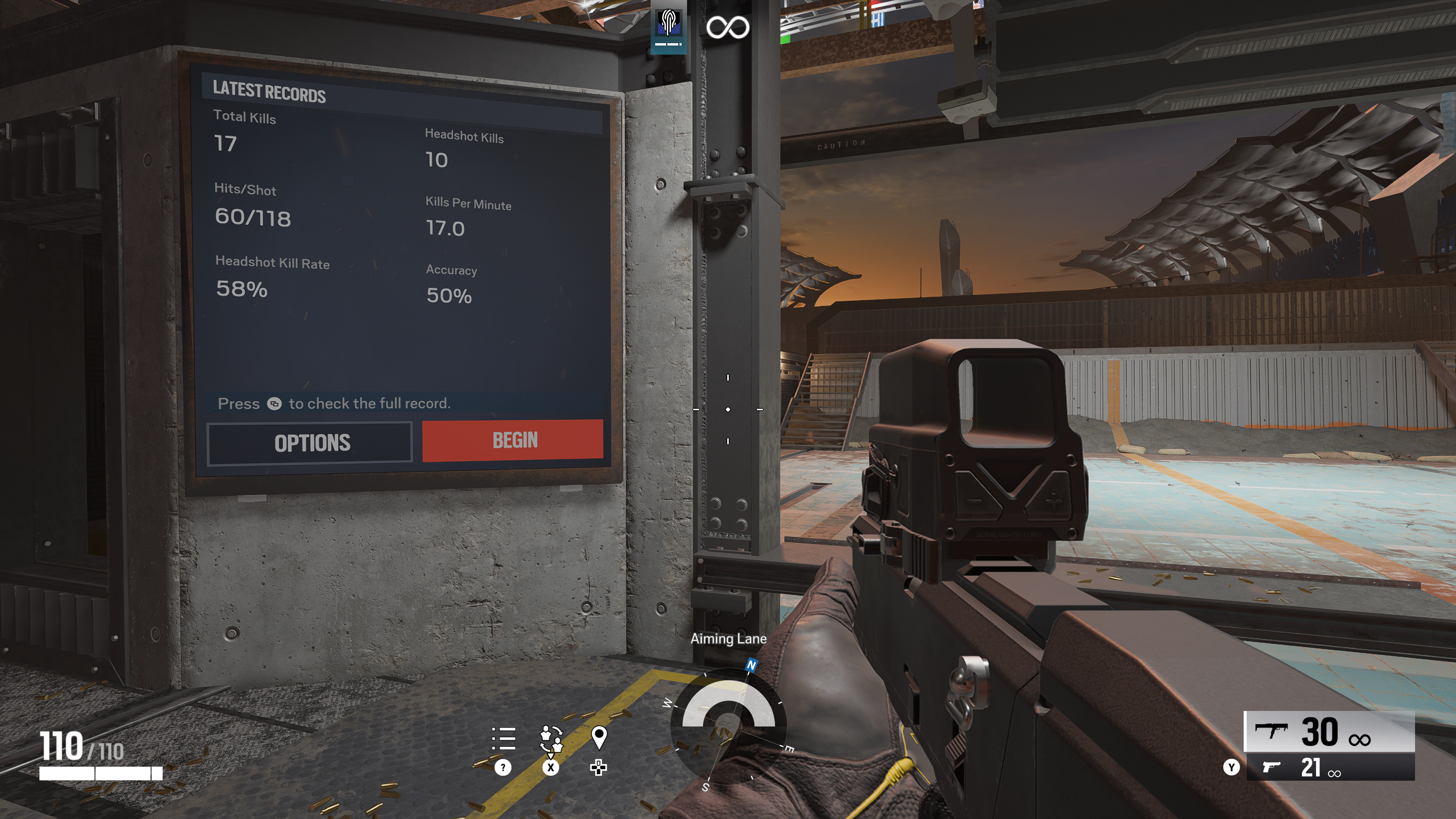
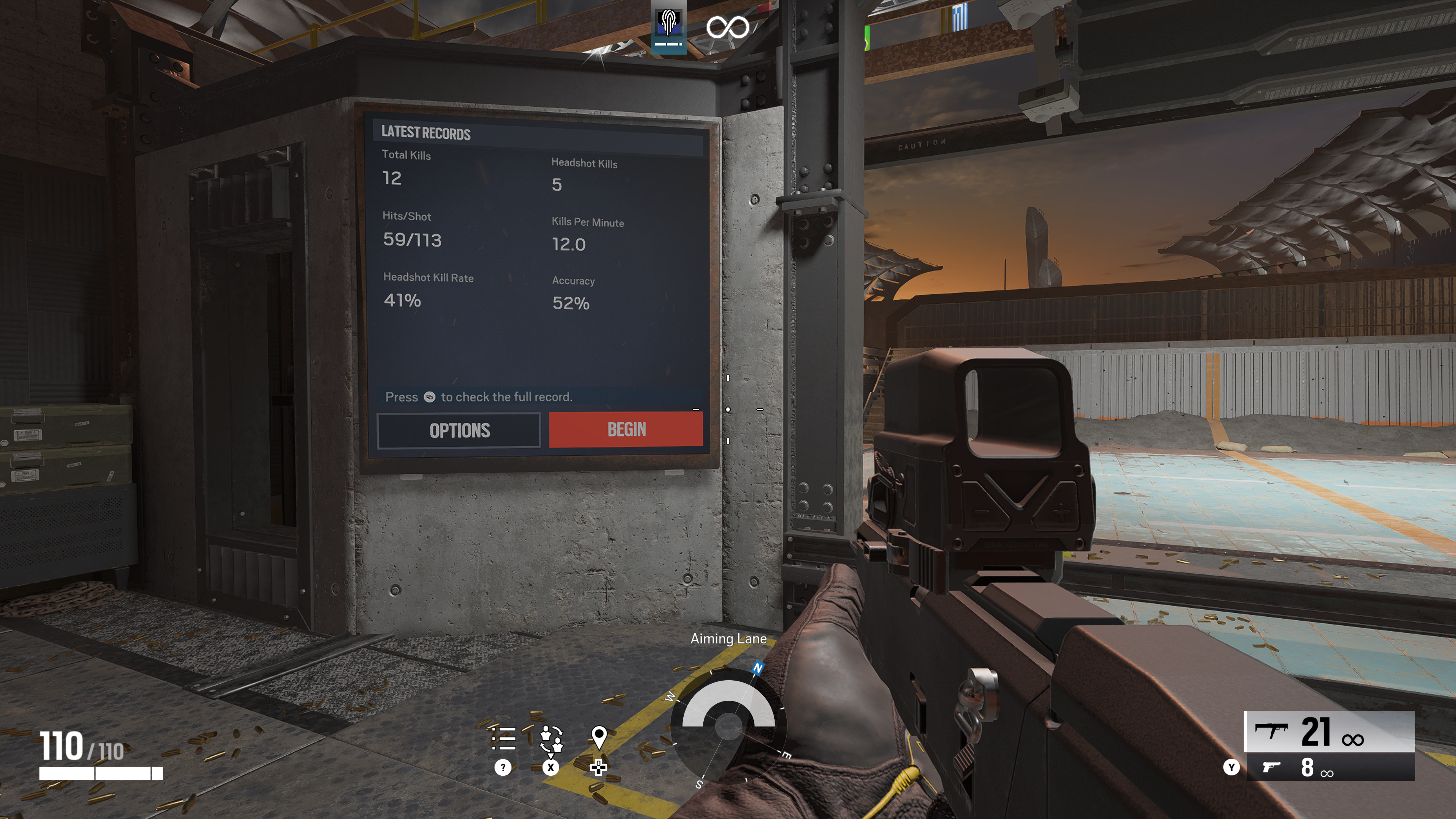
I actively tested this across Powerwash Simulator, DOOM: The Dark Ages, and the Rainbow Six Siege practice ranges, strictly analyzing Mouse & Keyboard vs. Controller outputs.
The data: I found a fascinating split in the metrics: playing inverted on a controller yielded a higher overall accuracy percentage. However, playing Mouse & Keyboard (inverted) resulted in significantly more overall kills and headshots, even though it was statistically less accurate. The sheer speed and volume of Mouse & Keyboard overcame the slight accuracy penalty.