Item and Trader System
Category: Inventory, Data Objects, and Economy Logic
Context: This page documents the modular item architecture used in Data Division, including CollectableItem, Flashdrive, and the trader-side keyword/value logic.
Item Categories
The item system was built around three broad item types:
CollectableData ItemsUtility Items
That split mattered because the game was not using one flat inventory object for everything. The data-economy loop needed certain items to behave differently from generic pickups.
CollectableItem
CollectableItem handled physical world objects that could be picked up and assigned faction/value metadata.
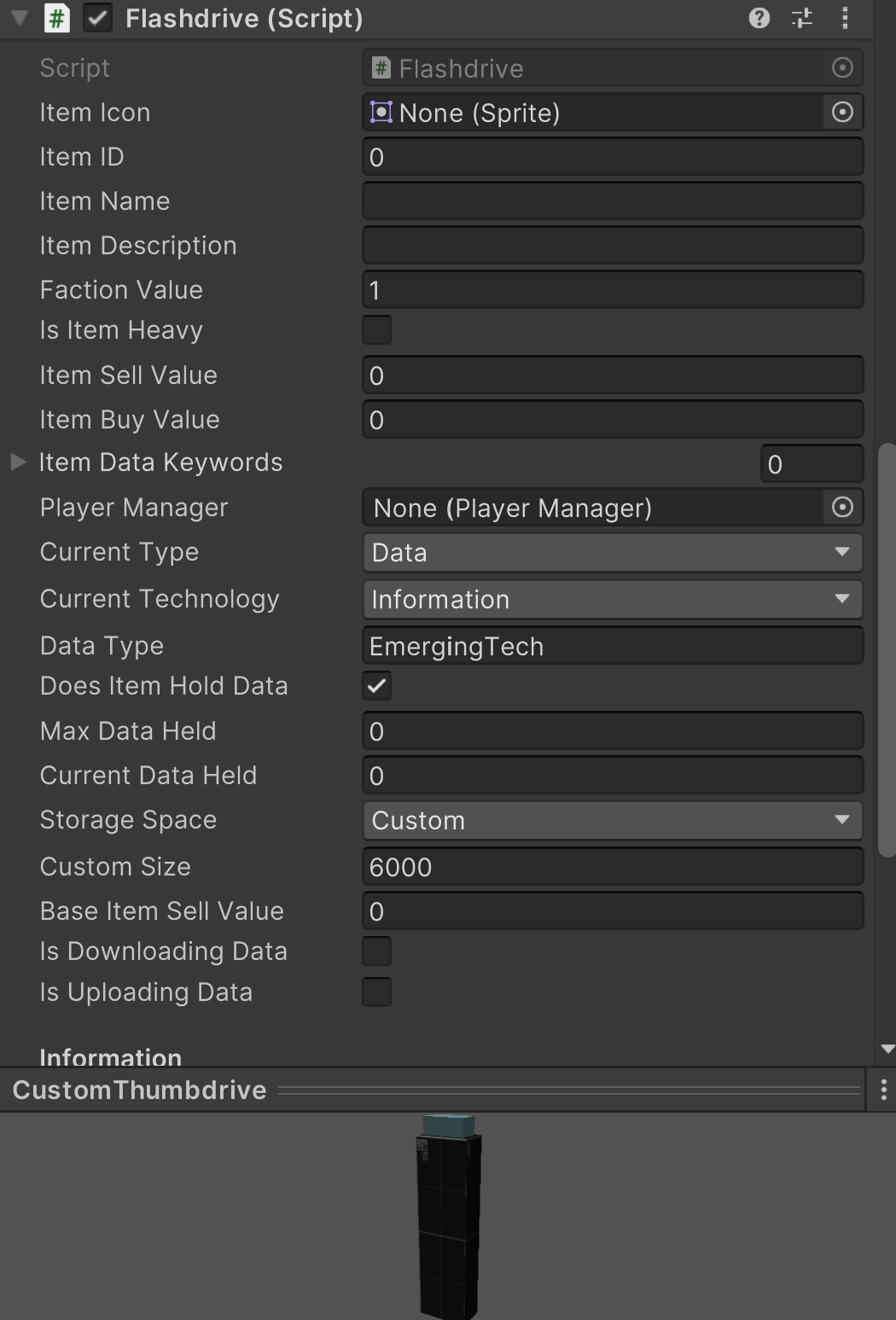
Useful fields visible in the component:
Item IconItem IDItem NameItem DescriptionFaction ValueIs Item HeavyItem Sell ValueItem Buy ValueItem Data KeywordsPlayer ManagerCurrent TypeCurrent Technology
This made the item system flexible enough to represent more than one kind of loot object without rewriting the entire interaction chain.
Flashdrive As A Utility Item
The Flashdrive was a type of UtilityItem that could actually hold data.
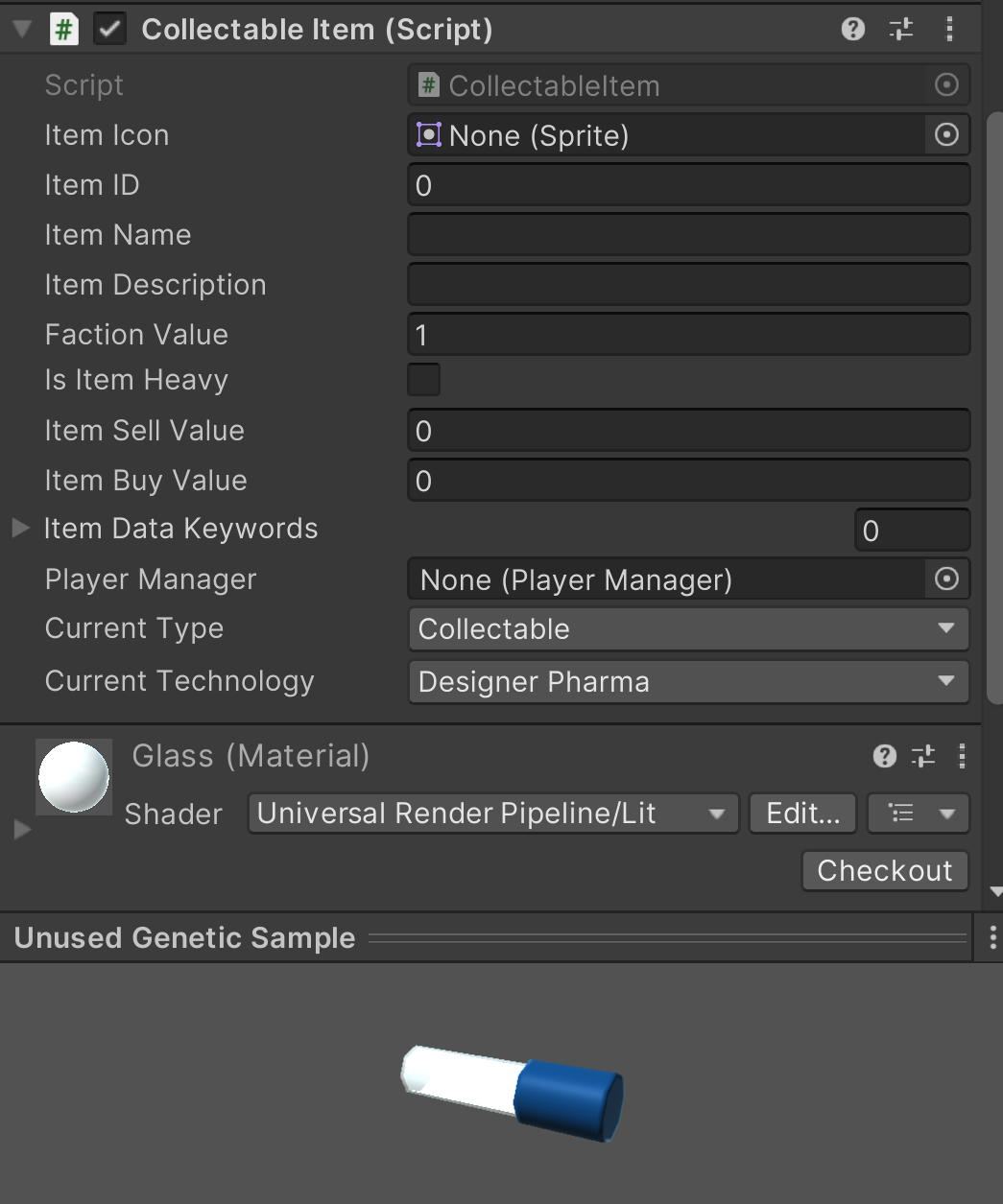
That is one of the more important objects in the entire project because it bridged:
- terminal interaction
- physical inventory
- data theft
- workstation processing
- sale/donation/synthesis routing
Important Flashdrive fields included:
Current TypeCurrent TechnologyData TypeDoes Item Hold DataMax Data HeldCurrent Data HeldStorage SpaceCustom SizeBase Item Sell ValueIs Downloading DataIs Uploading Data
This was the right design move. A flashdrive is not just generic loot in this project. It is a transfer object with state.
Why The Item Layer Was Modular
The project needed items to support more than one loop:
- extraction and carrying
- value and sale
- faction alignment
- data storage
- workstation transfer
That is why the system was made modular instead of flat. A vial, a flashdrive, and a general sellable object could share some baseline fields while still behaving differently where it mattered.
Trader System
The trader side used faction-sensitive keyword logic rather than only fixed prices.
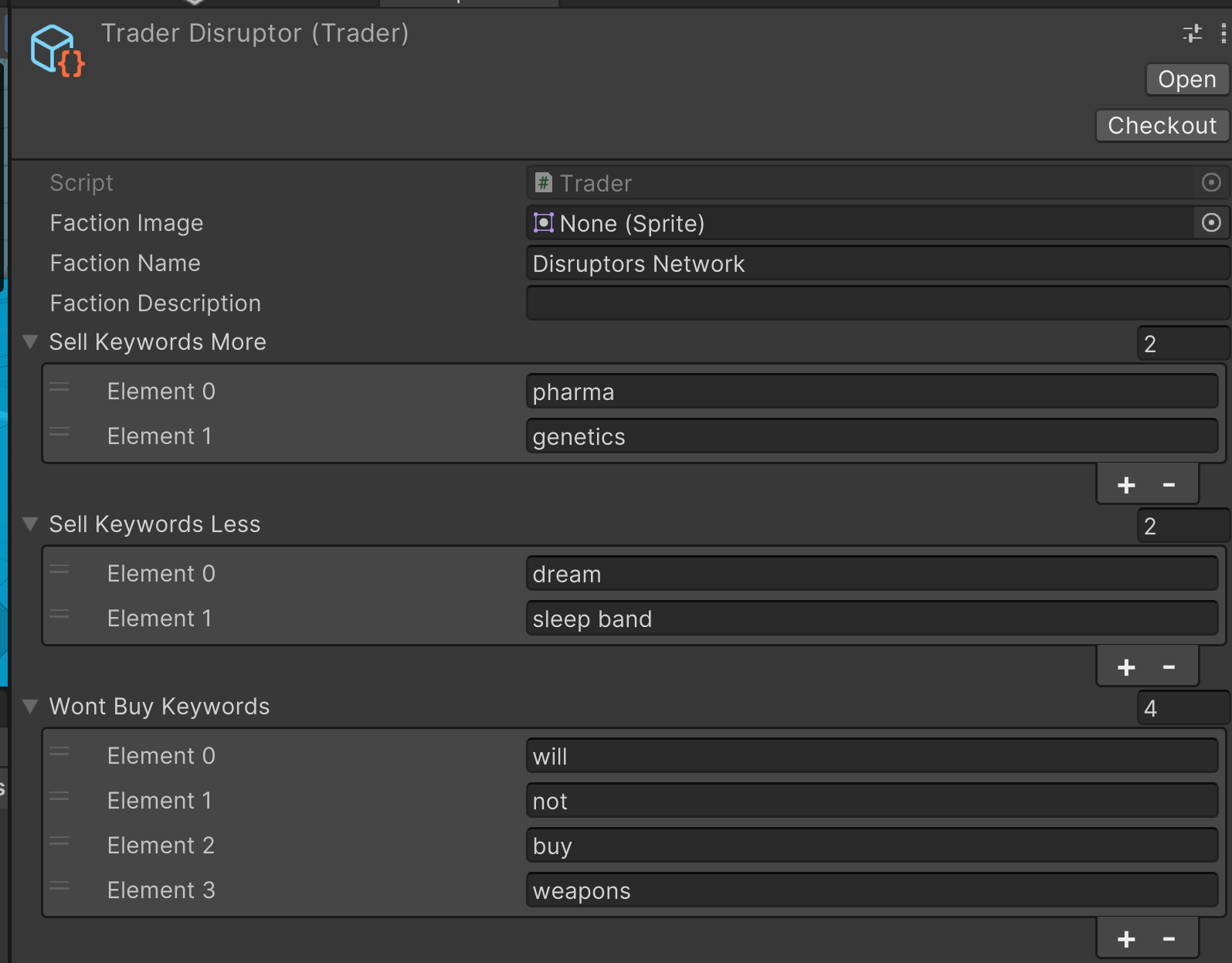
The example shown here is a Trader Disruptor object for the Disruptors Network faction. It includes:
Faction ImageFaction NameFaction DescriptionSell Keywords MoreSell Keywords LessWont Buy Keywords
That is a useful economy detail because it means the trader is not just:
- buy item
- sell item
It is:
- evaluate item keywords
- change value by faction interest
- refuse certain categories entirely
So the market logic had at least the beginning of ideological/factional differentiation.
Relationship To The Other Systems
The item layer connected directly into:
- Terminal Interfacing System: Brute-Force Access, Printing, and Data Capture
- Data Workbench System: Processing, Synthesis, and Information Flow
- Player Data and Dependent Systems: Groundwork Architecture
That mattered because the item system was not a side mechanic. It was part of the larger information economy.
Why This System Mattered
The strongest point here is that Data Division treated data as a physicalized resource.
That only works if the item architecture supports:
- objects with metadata
- objects that can hold information
- faction-sensitive value
- progression-sensitive routing
The Flashdrive is the clearest example. It is one of the smallest objects in the game, but it sits at the center of the whole loop.